Key features & use cases comparison
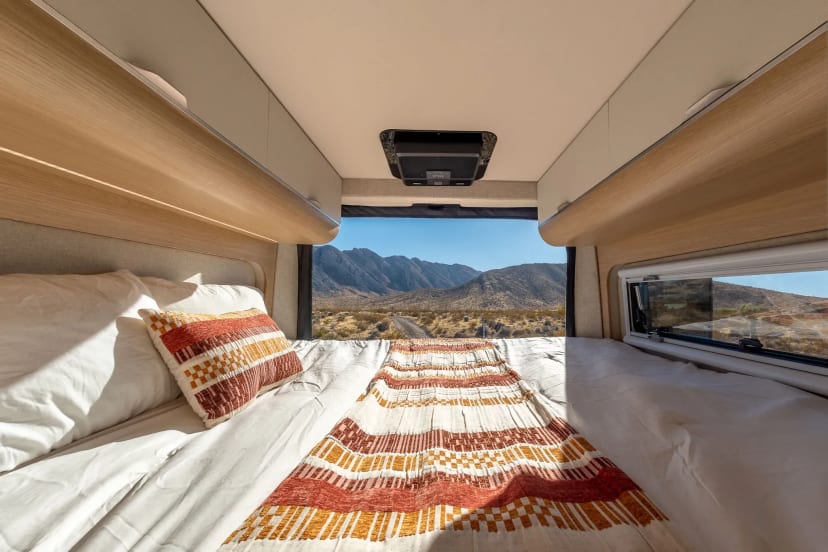
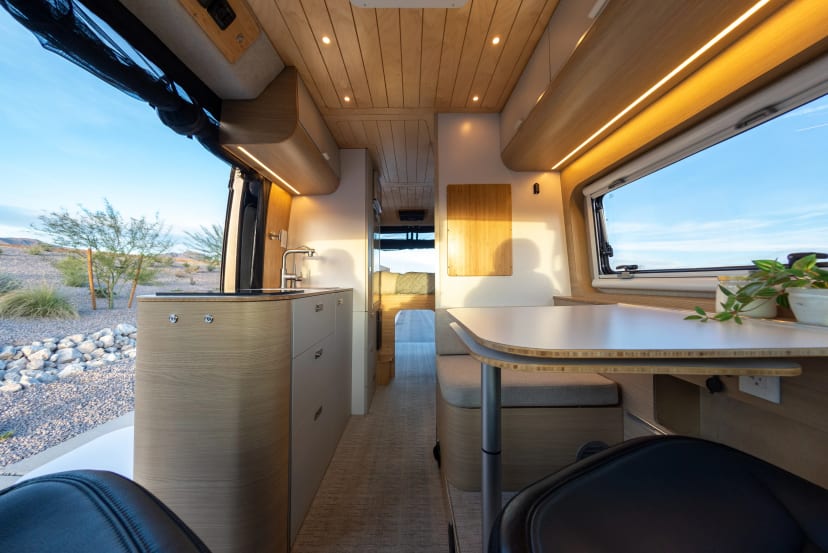
The Noovo Lite is designed for extended off-grid living, appealing to full-time vanlifers and remote workers. Its custom-built interior and powerful electrical system cater to those seeking a home-like experience on the road, at one of the most accessible price points in the premium Class B market.
The Winnebago Revel, built on a Mercedes-Benz Sprinter 4x4 chassis, targets outdoor enthusiasts and adventure seekers. It offers robust off-road capability and a gear-first interior, built around a rear power-lift bed and a large gear garage for bikes, skis, and bulky equipment.
Both vans excel in off-grid capabilities but differ significantly in their chassis, interior philosophy, and price.
The most significant differences between the Noovo Lite and Winnebago Revel lie in their chassis, off-road capabilities, and interior design philosophy. The Noovo Lite, built on a RAM ProMaster chassis, offers a wider, more spacious interior and a more powerful standard electrical system, making it ideal for extended off-grid living. For a deeper look at how the two platforms drive and age, see our RAM ProMaster vs Mercedes Sprinter chassis comparison.
The Winnebago Revel, with its Mercedes-Benz Sprinter 4x4 chassis and 3.0L six-cylinder turbo-diesel, excels in off-road performance and is designed for adventure enthusiasts. Its more compact size (19'7" vs 20'11") helps in tight trailheads, and its gear garage is one of the best storage solutions in the class. The trade-off is a more utilitarian interior, with a single forward-facing dinette seat and a bed you set up above your equipment.
Both vans offer wet baths with cassette toilets, but the Noovo Lite's larger fresh water capacity (40 gallons vs 21 gallons) roughly doubles the time between refills, which matters once you shower on board. The gap is even wider on energy: the Lite's lithium battery capacity runs from 660Ah up to 1320Ah with 400W of solar, against the Revel's 200Ah battery and 230W panel. That difference is what lets the Lite power a microwave, air conditioning, and a full work setup for days off-grid.
The Revel's higher starting price ($210,292 vs $165,750 for the Noovo Lite) reflects its specialized 4x4 chassis and Winnebago's established brand. The Noovo Lite offers a more affordable entry point with a focus on customization and full-time living comfort.
The Noovo Lite and Winnebago Revel cater to different segments of the van life market, reflected in their distinct features and specifications.
The Noovo Lite, built on the RAM ProMaster 3500 chassis, offers a more spacious interior with its longer length and wider body. Its 3.6L Pentastar V6 gasoline engine may be preferable for some in terms of fuel availability and maintenance costs. The Revel's 3.0L turbo-diesel is known for longevity and torque, and its 4x4 drivetrain is the reason to pick it if leaving the pavement is non-negotiable. Within the Winnebago lineup itself, the Revel is the adventure specialist: see our Winnebago Revel vs Winnebago Travato comparison if you are weighing it against its livability-focused sibling.
In terms of livability, the Noovo Lite excels with its larger fresh and grey water capacities (40 gallons each vs 21 gallons in the Revel), allowing for longer periods between fill-ups and dump-outs. Its electrical system, with 660Ah to 1320Ah of lithium, 400W of solar, and a 3000W inverter, comfortably outmuscles the Revel's 200Ah battery, 230W panel, and 2000W inverter. This makes the Lite better suited for energy-intensive appliances and extended off-grid stays.
Both vans feature wet baths with cassette toilets, but their kitchen setups differ. The Noovo Lite includes a microwave and a larger refrigerator, catering to those who prefer more home-like cooking amenities. The Revel's kitchen is more compact and utilitarian, reflecting its focus on outdoor-oriented users.
The sleeping arrangements are notably different. The Noovo Lite provides a fixed RV queen-size bed (60" x 80"), always ready and prioritizing comfort for full-time living. The Revel features a power lift bed (49" x 79") that raises to the ceiling to open up the gear garage, maximizing daytime space but offering a smaller sleeping area.
The Revel's price premium is justified if you genuinely use its 4x4-grade capability; it is hard to justify if your off-grid travel is mostly forest roads and BLM land. Vans at this level are also covered in our guide to the best luxury Class B RVs, and the Noovo Lite remains the more affordable option focused on comfortable, long-term living.

The Noovo Lite and Winnebago Revel represent different investment levels in the Class B camper van market. The Noovo Lite starts at a lower base price of $165,750, offering a more affordable entry point for those seeking a custom-built, off-grid capable van. The Winnebago Revel, starting at $210,292, commands a premium price, reflecting its specialized 4x4 chassis and established brand reputation.
Financing options are available for both vans, with Noovo offering tailored plans directly, including terms up to 20 years, and Winnebago providing financing through its dealer network. As a starting point, the Noovo Lite is estimated from $1,068 per month, while the Revel starts around $1,405 per month.
Both vans are likely to retain value well due to their premium positioning and off-grid capabilities. The Noovo Lite's standard-equipment electrical system and full-time-living layout appeal to a growing segment of the resale market. The Winnebago Revel benefits from Winnebago's strong brand reputation and a large, active owner community, which typically translate to good resale values.
When considering total cost of ownership, factor in the Revel's dealer fees and diesel maintenance against the Noovo Lite's direct ownership model, with mobile service available in all 50 states. The Lite's larger solar array and water tanks can also mean fewer paid campground stops over time.
Discover similar content with these recommended articles.


Comparison

Reviews

Comparison

Comparison

VanLife