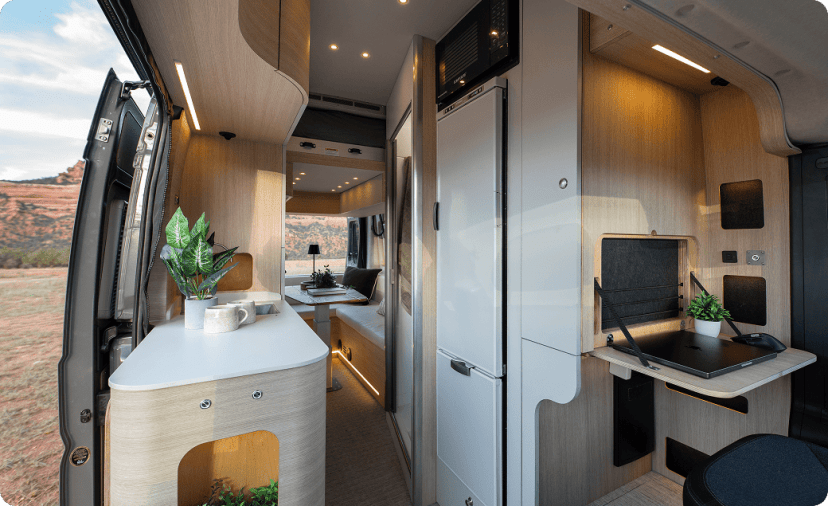
Cooking in an RV is not camp cooking anymore. A modern Class B galley runs a real refrigerator, a precise induction burner, and enough battery to sear, simmer, and brew wherever you happen to park.
The technology explains the shift. Induction transfers about 85 percent of its heating energy directly into the cookware, versus roughly a third for gas, according to ENERGY STAR, which is exactly the math a battery-powered kitchen needs.
This guide covers the galley itself, the induction versus propane decision, the honest power cost of every meal, and the short list of appliances that earn their space. Bring your battery mindsetan appetite; the measurements will be in amp-hours.
Strip any good van kitchen to its bones and you find the same six parts, from the entry-level Noovo Lite to a six-figure flagship:
Most Class B kitchens run along one wall behind the driver, keeping a clear walkway and putting the cook a half-turn from the fridge and sink. Larger builds spread out: the Noovo Plus pairs its open modern kitchen with dedicated lounge and dining space, so someone can chop while someone else sets the table without negotiating.
Judge a layout by traffic, not photos. If two people can pass each other while dinner simmers, the galley placement is right.
The golden rule of galley design: everything within one step. A good van kitchen puts fridge, heat, sink, and knife inside a single pivot, which is why cooking aboard often feels faster than cooking at home.
Both fuels cook excellent dinners; they differ on safety, air quality, and where the energy comes from. Here is the fair fight:
| Attribute | Induction | Propane |
|---|---|---|
| Heat control | Instant, precise, repeatable to the degree | Good, with a visible flame chefsooks trust |
| Safety | Cool-touch surface, auto shutoff, no flame | Open flame inside a small space; requires constant attentiondemands respect |
| Air quality | No combustion indoors | Adds moisture and combustion fumes; ventilation required |
| Energy supply | Draws from batteries, refilled by solar and driving | Tank refills, level checks, and a separate fuel system |
| Cookware | Magnetic pans only (cast iron and most stainless qualify) | Any pan you own |
Propane still earns its place in minimal builds with small battery banks, and some cooks simply love a flame. The honest rule: match the fuel to the van's energy system rather than to habit. A big lithium bank makes propane redundant; a tiny one makes it essential.
Once a van carries several hundred amp-hours of lithium, propane becomes a second fuel system with its own tank, lines, and refill errands. Electric-first builds like Noovo's skip it entirely: one energy system feeds the cooktop, the climate control, and your laptop, refilled by 400 watts of solar and the alternator while you drive, as our off-grid power guide lays out. Simpler is safer, and it never runs out at 8 p.m. on a Sunday.
Measure meals in amp-hours at 12 volts and battery anxiety quietly leaves the kitchen. Typical numbers from real galley life:
Put together: coffee, breakfast, dinner, and the fridge land near 100 to 120Ah on a full cooking day. A 660Ah lithium system like Noovo's covers days of that before the solar even reports for duty, which is why induction stopped being a compromise.
Two footnotes make the math even friendlier. At a campground with shore power, cooking costs your battery nothing at all. And induction is quick: ENERGY STAR notes boiling water can take nearly half the time it does on gas, which means less energy spent and dinner on the table sooner.
Van storage runs on ruthless economics: every gadget pays rent in usefulness or gets evicted at the next declutter. Six appliances keep earning their spot:
Worth naming what did not make the list: toasters, full espresso machines, and air fryers all audition and usually get cut, either for bulk or for demanding big power in short bursts. If you truly love one, make it replace something rather than join everything. The galley stays happy at six appliances.
Galley layouts differ between models more than any spec sheet shows. Browse our camper vans for sale to compare the kitchens in person or in photos, ideally while hungry; it clarifies priorities wonderfully.
Great van cooking is choreography more than sacrifice. Prep everything into one bowl before the heat goes on, cook in a single pot or pan, and treat cleanup as the last step of the recipe rather than a separate chore. The kitchen resets in three minutes, and tomorrow's cook thanks tonight's.
Shopping changes too, for the betterpleasantly. With a compact fridge, owners shop the way people do within small city apartments: every two or three days, fresh, and often from whatever farmers market the route offers. Menus get simpler and better at the same time, which makes everyone happy.nobody complains about.
From the road: one Noovo family describes the ritual best: close the laptop, cook a real dinner, and eat it watching the sunset in a national park. The kitchen is small; the dining room is enormous.
Outfitting the galley for your first trips is its own small art, and our van essentials checklist covers the gear owners actually keep after year one.
Curious how a real galley would fit the way you cook? Talk with our team about layouts, induction options, and storage for your particular kitchen habits. Fair warning: we will probably share our favoritetrade recipes.